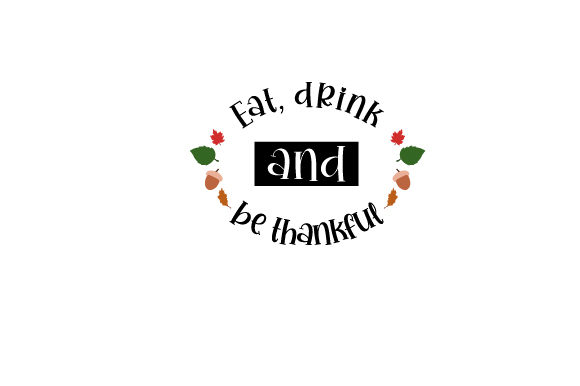
Eat, Drink and Be Thankful: A Designer's Real-World Review
As someone who has spent years evaluating machine embroidery design files for both personal crafting and commercial production, I have learned to look past the pretty preview image. The true test of a digital asset is how it behaves on actual fabric under the presser foot. Today, I am putting the Eat, Drink and Be Thankful design through that same rigorous process. This piece falls squarely into the Crafts category with a heavy focus on Thanksgiving themes, but does it hold up when moved from a screen to a sewing machine?
The first impression of Eat, Drink and Be Thankful is one of warmth and approachability. It captures the essence of the holiday without feeling overly cluttered or generic. The layout suggests a balanced composition that works well as a focal point on garments or home goods. For designers looking to build a cohesive collection of holiday items, this file offers a strong foundation. It feels less like a rushed seasonal add-on and more like a staple piece that could anchor a boutique line.
From Screen to Stitch: A Real Project Scenario
To understand the practical value of this design, let us imagine a specific workflow. I am preparing a custom order for a local client who runs a small bakery. She wants to create a limited run of aprons for her staff during the November rush. She needs something that says "holiday spirit" but remains professional enough for a food service environment. This is where Eat, Drink and Be Thankful shines.
When I imported the file into my digitizing software to prepare the embroidery project, the stitch structure looked clean. The text spacing was generous enough to avoid crowding, which is a common issue with many holiday fonts. I decided to test the design on a cotton canvas apron before committing to the full batch. The contrast between the thread colors and the fabric texture was excellent. The design did not distort when stitched onto the curved area of the chest pocket, proving its versatility for various garment types.
This scenario highlights why this file is valuable for an Etsy seller or a small business owner. It allows for rapid prototyping. You can quickly mock up a printable mockup showing the design on an apron, a tote bag, or a kitchen towel, and know that the final physical product will match the visual expectation. Customers trust brands that deliver consistent quality, and a well-executed custom apparel item builds that trust instantly.
Performance Across Different Materials and Applications
The beauty of Eat, Drink and Be Thankful lies in its adaptability. It is not limited to just t-shirts; it performs well across a wide spectrum of handmade products. Whether you are creating a personalized gift for a grandmother or a branded item for a craft fair, this design transitions smoothly.
- Sweatshirt Embroidery: The density of the stitches appears sufficient to stand out against the soft loops of fleece or French terry, making it ideal for cozy winter wear.
- Baby Embroidery: For those making onesies or bibs, the design's moderate size prevents it from overwhelming delicate fabrics while still delivering a clear message.
- Kitchen Textiles: On tea towels or pillow covers, the design serves as a charming decorative accent that fits perfectly within a farmhouse aesthetic.
- Embroidered Patches: If you plan to cut out the design and apply it as a patch, the border stability looks promising for durability.
However, not every application is created equal. When considering this as a digital embroidery file for commercial use, you must be strategic about where you place it. It excels on stable, woven fabrics but requires caution on others.
Where to Exercise Caution
Even the best designs have limitations. If you are working with a small hoop size, you might find that the lettering loses some clarity if the original file includes intricate details that get compressed. Similarly, on stretchy fabrics like jersey knit, the tension of the satin stitch can cause puckering if the stabilizer is not chosen correctly. I would advise against using this design on thin, sheer materials without a heavy-duty backing, as the stitch density could show through the front of the fabric.
Dark fabrics also present a challenge. While the design likely comes with standard colorways, you may need to adjust your thread colors or add a top-stitch layer to ensure the text pops against navy or black backgrounds. Additionally, if you are designing for frequent washing, such as work uniforms or children's clothing, always verify that the fill stitches are secure enough to withstand friction.
Visual Appeal and Brand Consistency
In the world of craft business, presentation is everything. A design like Eat, Drink and Be Thankful elevates the perceived value of a finished product. When a customer sees a neatly stitched phrase on a high-quality tote bag, they perceive the item as a premium good rather than a mass-produced novelty. This perception directly impacts buyer engagement and sales conversion rates.
The design supports brand consistency by offering a recognizable motif that customers can associate with your shop. If you specialize in holiday decor, having a library of well-tested files ensures that your output remains uniform. Whether you are selling commercial embroidery services or your own branded merchandise, the professionalism of the stitching reflects on your reputation. A sloppy execution can ruin a great concept, but a precise execution makes even a simple phrase feel luxurious.
Practical Notes for the Modern Designer
Before you download and start stitching, there are several technical steps you should take to ensure success. First, always test the design on scrap fabric that matches the weight and texture of your final product. This helps you identify any potential issues with stabilizer selection or thread tension.
Review the stitch density carefully. High-density areas can sometimes lead to thread breakage or needle deflection, especially on older machines. Check whether the design includes necessary trim commands or if you need to manually adjust them. If you intend to sell finished items made from this file, confirm the licensing terms explicitly. Some design assets allow for personal use only, while others permit commercial sales of the final product.
It is also wise to inspect the smaller details. Sometimes, tiny flourishes in a font can get lost or merge together during the stitching process. Testing in black and white on a monitor can help you visualize the contrast levels before you waste expensive thread. Finally, compare how the design looks on light versus dark backgrounds to ensure it meets your vision for both.
Ultimately, Eat, Drink and Be Thankful is a solid addition to any designer's toolkit. It balances aesthetic appeal with practical functionality, making it suitable for everything from a quick homemade gift to a polished boutique inventory. By approaching it with a critical eye and following proper testing protocols, you can turn this digital file into a tangible source of pride and profit. Remember, the best designs are those that respect the medium and the maker, and this one certainly seems to do just that.