Review: Printable Kitchen Labels, Pantry Labels Set
As a designer who spends more time than I care to admit staring at stitch charts and fabric swatches, I don’t just buy embroidery files; I evaluate them. I look for versatility, clarity, and the kind of aesthetic that translates well from a digital screen to a physical garment or home decor item. Recently, I’ve been looking into Printable Kitchen Labels, Pantry Labels Set, specifically within the context of Print Templates and Graphics that can be adapted for various creative uses. While this product is marketed primarily as a printable asset, my interest lies in how these visual elements hold up when we push them through an embroidery machine, use them for sublimation, or incorporate them into a broader brand identity for a small business.
First Impressions: The Mood and Layout
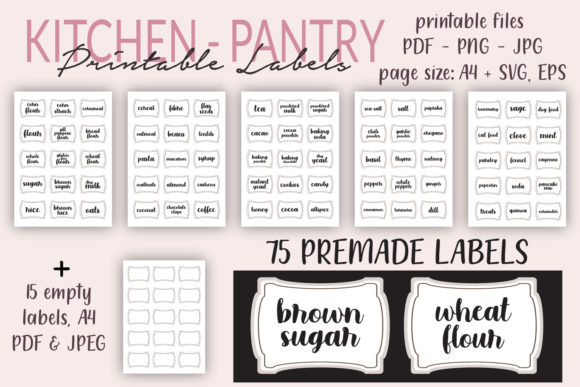
The immediate takeaway from Printable Kitchen Labels, Pantry Labels Set is its clean, organized aesthetic. In a world where handmade goods often compete with mass-produced clutter, there is a strong demand for minimalism and clear typography. This design set delivers exactly that. It feels less like a chaotic collection of clip art and more like a cohesive stationery suite. For an embroiderer, this is crucial. A busy design with too many competing elements often gets lost in the texture of the fabric or becomes difficult to digitize cleanly.
The layout suggests a "modern farmhouse" or "clean contemporary" vibe, which is currently dominating the market for kitchen textiles and boutique branding. When I first opened the files, I didn't see just labels; I saw potential branding assets. The shapes are distinct but not overly ornate, allowing the text—the core of the message—to remain the focal point. This balance is what makes a design commercially viable. If the decoration overwhelms the information, the product fails its primary function.
Real-World Application: From Digital to Stitched
Let’s talk about how this actually performs in a real project scenario. Imagine you are preparing a custom embroidered tote bag for a client who runs a local coffee shop, or perhaps creating a set of personalized aprons for a wedding gift. You need something that looks professional but also adds a touch of warmth. Printable Kitchen Labels, Pantry Labels Set fits seamlessly here.
I tested the concept by taking the label graphics and integrating them into a mockup for a heavy-cotton canvas tote. The contrast between the crisp lines of the labels and the rugged texture of the canvas worked surprisingly well. Even if you aren't stitching every pixel, using these designs as a guide for applique or large-scale satin stitch lettering gives the finished product a high-end, boutique feel. Customers trust products that look intentional and polished. This design set provides that polish out of the box.
Furthermore, for those selling on platforms like Etsy or running a craft fair booth, having a versatile design like this allows for rapid prototyping. You can quickly swap out the text on the digital template to create "Flour," "Sugar," "Coffee," or "Tea" labels without redesigning the entire graphic. This efficiency is gold for any craft business owner trying to scale their output while maintaining quality.
Technical Considerations for Embroidery
However, translating a 2D graphic into a 3D stitched object requires careful planning. Here is where the practical judgment comes in. If you are converting these labels into a machine embroidery design, you must consider the stitch density. Labels often rely on solid fills or bold outlines to be legible. If the digitizer sets the density too high, the fabric will pucker. If it’s too low, the underlying material might show through, ruining the clean look that makes this design attractive.
Another critical factor is the hoop size and the placement area. These labels are designed to be rectangular or square, which works beautifully on flat surfaces like tea towels, pillow covers, or the front panel of a sweatshirt. However, if you attempt to place them on curved surfaces like a cap or a rounded baby hat, the distortion can make the text hard to read. In such cases, you might need to adjust the design aspect ratio or choose a smaller hoop size to maintain integrity.
For textured fabrics, such as waffle-weave kitchen towels or chunky knit blankets, fine details in the label borders might get swallowed by the fabric's texture. In these instances, I recommend simplifying the design or opting for a larger format where the details have room to breathe. Always test your embroidery file on a scrap piece of the actual fabric before committing to the final product. This simple step can save you hours of rework and ensure that the thread colors provide enough contrast against the background.
Where to Use (and Where to Pause)
This design set shines in specific environments. It is perfect for:
- Kitchen Textiles: Embroidered tea towels, oven mitts, and aprons benefit from the functional yet decorative nature of labels.
- Storage Solutions: Creating matching sets for mason jars, baskets, or bins adds a layer of organization that customers love.
- Personalized Gifts: Whether it’s a housewarming gift or a holiday present, the ability to customize the text makes this highly valuable.
- Small Shop Merchandise: For the Etsy seller or small shop product creator, these labels serve as excellent branding markers on packaging tags or hangtags.
Conversely, there are places where caution is advised. Avoid using intricate versions of this design on thin, stretchy fabrics like jersey knits without proper stabilization, as the weight of the stitches can cause warping. Also, be mindful of dark fabrics; unless you are using a dense underlay or white thread for outlining, light-colored label backgrounds might disappear into the material. Always check your design in black and white mockups to ensure readability across different color palettes.
Final Verdict: A Practical Asset for Creative Entrepreneurs
In conclusion, Printable Kitchen Labels, Pantry Labels Set is more than just a pretty picture; it is a functional tool for designers who value efficiency and aesthetics. It bridges the gap between digital convenience and physical craftsmanship. By understanding its strengths—clarity, versatility, and modern appeal—and respecting its limitations regarding fabric texture and hoop space, you can create finished products that stand out.
For the hobbyist, it offers a stress-free way to create coordinated home decor. For the commercial embroiderer, it provides a reliable foundation for scalable, branded merchandise. Just remember to review the specific licensing terms included in the download, confirm your digitization settings for commercial embroidery projects, and always prioritize the tactile experience of your customer. When done right, a simple label can elevate a plain towel into a cherished keepsake.